Your Ad Here

Tuesday, November 20, 2007

Biometrics Help Identify, Apprehend and Deter Illegal Migrants

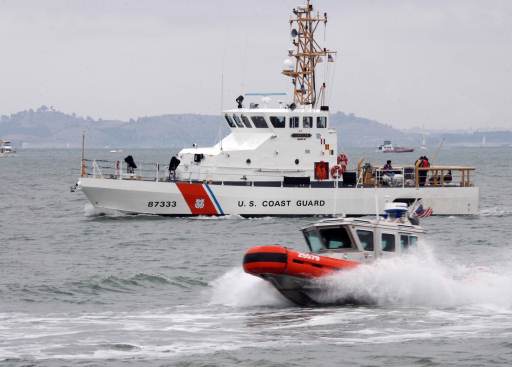
The U.S. Department of Homeland Security (DHS) announced today that in the first year of operation, its biometrics-at-sea program has been a success and accomplished its intended goals. In its first 12 months, the program collected biometric data from 1,368 migrants, prosecuted 90 of those migrants, and helped reduce the flow of illegal migration by nearly 50 percent in the waters between Puerto Rico and the Dominican Republic.

"The Coast Guard is charged with securing America’s borders along more than 95,000 miles of coastline," says Rear Adm. Wayne Justice, director of response policy. "The use of biometric technology is an effective tool which will help increase maritime domain awareness through the positive identification of those we interdict. This collaborative effort is helping to deter illegal migration by applying consequences through successful prosecution."

This program, initiated last November, is an information sharing effort between US VISIT and the U.S. Coast Guard to address the challenge of identifying illegal migrants who are interdicted at sea. The pilot program provides the Coast Guard with the technical capability to digitally capture fingerprints from illegal migrants apprehended at sea. The Coast Guard then uses satellite technology to immediately compare the migrant information against US VISIT’s data, which includes information about wanted criminals, immigration violators and those who have previously encountered government authorities.

Until now, the Coast Guard did not have the technology to accurately identify illegal migrants interdicted in the most highly traveled areas, namely around Puerto Rico. The success of the program has significantly advanced the effort to develop effective mobile solutions for biometric collection and analysis, and represents another step in the department’s comprehensive strategy to secure the nation’s borders.

Watch more breaking news on our video feed:


Bookmark http://universeeverything.blogspot.com/ and drop back in sometime.

Labels: , , ,

Sunday, March 11, 2007

Biometrics Helps Identify, Apprehend Immigration Violators


The U.S. Department ofHomeland Security (DHS) announced initial results of a biometric identification pilot program between US-VISIT and the U.S. Coast Guard to target illegal migration in the Mona Passage, a body of water between the Dominican Republic and Puerto Rico. Since the start of the pilot program in November 2006, the Coast Guard has interdicted 21 vessels containing 558 undocumented aliens.

Twenty-two of the aliens apprehended face criminal prosecution for immigration offenses that prohibit attempts to enter or re-enter the U.S. illegally. Three of the aliens were previously removed as aggravated felons, and one alien was previously convicted of homicide in the United States.

"Biometrics is a powerful tool for the Coast Guard," says Rear Admiral Wayne Justice, Coast Guard assistant commandant for response. "It acts as a force multiplier by helping our officers to quickly and accurately identify the migrants they encounter, and aggressively enforce our immigration laws at sea. We're also sending a strong deterrent message to anyone thinking of entering U.S. territory through this body of water -- they will be apprehended, and we will know who they are and the facts of their immigration history."

The pilot program provides a technological capability for the Coast Guard to capture digital fingerprints and photographs from illegal aliens apprehended at sea and compare that biometric information against US-VISIT data. Aliens not being prosecuted are returned to the Dominican Republic, and their biometric information is retained and accessible to the Coast Guard to compare against future apprehensions.

The pilot project furthers a broader effort to develop a biometric mobile solution for collection and analysis, and represents another step in the department's comprehensive strategy to secure U.S. borders.


Bookmark http://universeeverything.blogspot.com/ and drop back in sometime.

Labels: , , , , , ,

Tuesday, February 20, 2007

Border Security System Faces Strategic, Operational, Technological Challenges


The U.S. Department of Homeland Security's US-VISIT border security system faces a variety of technological and other challenges, a government watchdog agency says.

US-VISIT is designed to collect, maintain, and share data on selected foreign nationals entering and exiting the United States at air, sea, and land ports of entry (POEs). These data, including biometric identifiers like digital fingerprints, are to be used to screen persons against watch lists, verify identities, and record arrival and departure.

US-VISIT entry capability had been installed at 154 of the 170 land POEs. Officials at all 21 sites visited by the Government Accountability Office (GAO) reported that US-VISIT had improved their ability to process visitors and verify identities.

DHS plans to further enhance US-VISIT’s capabilities by, among other things, requiring new technology and equipment for scanning all 10 fingerprints, notes GAO, the nonpartisan investigative arm of Congress.

"While this may aid border security, installation could increase processing times and adversely affect operations at land POEs where space constraints, traffic congestion, and processing delays already exist. GAO’s work indicated that management controls in place to identify such problems and evaluate operations were insufficient and inconsistently administered," GAO says.

For example, GAO identified computer processing problems at 12 sites visited; at 9 of these, the problems were not always reported. US-VISIT has developed performance measures, but measures to gauge factors that uniquely affect land POE operations were not developed; these would put US-VISIT officials in a better position to identify areas for improvement, GAO finds.

US-VISIT officials concluded that, for various reasons, a biometric US-VISIT exit capability cannot now be implemented without incurring a major impact on land POE facilities. An interim nonbiometric exit technology tested did not meet the statutory requirement for a biometric exit capability and thus cannot ensure that visitors who enter the country are those who leave, GAO says.

"DHS had not yet reported to Congress on a required plan describing how it intended to fully implement a biometric entry/exit program or use nonbiometric solutions. Until this plan is finalized, neither DHS nor Congress is in a good position to prioritize and allocate program resources or plan for POE facilities modifications," GAO adds.


Bookmark http://universeeverything.blogspot.com/ and drop back in sometime.

Labels: , , , , , ,

Sunday, January 21, 2007

Counter Height Can Improve Biometric Fingerprint Capture


Once a tool primarily used by law enforcement, biometric technologies such as fingerprint readers increasingly are being used by governments and private industry for a personal ID that can't easily be forged or stolen. But, despite their increased use, little attention has been paid to the human-system interaction that these technologies require. Biometrics are a fast-growing technology area.

With fingerprint scanners and other imaging devices, for example, user behavior can affect both the quality of the image and the time required to capture it. At present there are no guidelines for using biometric hardware and software that could lead to improved usability and interaction techniques.

As part of its role under the USA PATRIOT Act, researchers at the U.S. National Institute of Standards and Technology (NIST) conducted a study examining the effect of the work surface height of a fingerprint sensor on the quality and the time required to collect prints. NIST researchers collected five types of fingerprint images from 75 NIST employees, ranging in age from 17 to 67.

Images were collected from a "left slap"; (all fingers on the left hand except for the thumb); a "right slap"; a left or right thumb; and both thumbs. Work surface heights varied from 26 inches (660 millimeters) to 42 inches (1,067 millimeters). The fingerprint scanner used in the study had a height of 6 inches (152 millimeters)--the expected height of the next generation of fingerprint scanners to be used in many federal government applications.

The researchers found that participants performed fastest using a work surface height of 36 inches (914 millimeters); and a height of 26 inches (660 millimeters) produced the highest image quality. Participants preferred a work surface height of 32 or 36 inch (813 or 914 millimeters); the 42 inch height was most uncomfortable.

Seventy-six percent of the biometric participants preferred starting with their right hands, which also made the process faster. Biometric capture quality dropped dramatically when thumbprints were taken simultaneously rather than one at a time, the researchers say.


Bookmark http://universeeverything.blogspot.com/ and drop back in sometime.


Enter your Email


Preview Powered by FeedBlitz


Digg!

Labels: , , , , ,

Monday, November 20, 2006

Coast Guard Begins Biometric Use to Deter Illegal Entry by Sea


The U.S. Department of Homeland Security (DHS) has begun a pilot program that will collect biometric information from illegal migrants interdicted while attempting entry into U.S. territory through the body of water between the Dominican Republic and Puerto Rico known as the Mona Passage.

The U.S. Coast Guard will compare the digital fingerprints and photographs of illegal migrants against the US‑VISIT database, which includes information about wanted criminals, immigration violators and those who previously encountered government authorities. Those attempting to illegally enter the United States and its territories are prosecuted under U.S. law in conjunction with bilateral agreements in effect.

"The Coast Guard's role in maritime border security is to support the national policy of orderly, safe and legal migration while ensuring safety of life at sea," says Admiral Thad Allen, the commandant of the Coast Guard. "Since 9/11, it has become increasingly important to know who is attempting to gain access to the United States, and this project gives us the means to positively identify and take appropriate actions regarding individuals intercepted at sea."

The partnership between the Coast Guard and US-VISIT represents the department’s commitment to detain, apprehend and prosecute illegal migrants and migrant smugglers. The project furthers the broader objective to develop a biometric mobile solution for DHS and is another step in the U.S. government’s plan to enhance security and ensure the integrity of the immigration and border management system.

The US‑VISIT program is a system of biometrically enabled security measures that collect biometric and biographic information from travelers at U.S. visa‑issuing posts around the world, and upon their arrival in the United States at air, sea and land border ports of entry.


If you can't contribute, please support us by clicking the Google text ad above to support us in that way. Thank you!

Labels: , , , , , ,