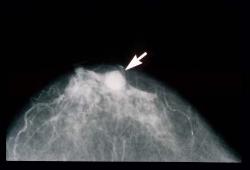
Study Identifies Gene Alterations in Lung Cancer
An international team of scientists, supported in part by the National Human Genome Research Institute (NHGRI), one of the National Institutes of Health (NIH), has announced that its systematic effort to map the genomic changes underlying lung cancer has uncovered a critical gene alteration not previously linked to any form of cancer. The research, published in the advance online issue of the journal Nature, also revealed more than 50 genomic regions that are frequently gained or lost in lung adenocarcinoma, the most common type of lung cancer in the United States.
“This view of the lung cancer genome is unprecedented, both in its breadth and depth,” says senior author Matthew Meyerson, a senior associate member of the Broad Institute of MIT and Harvard in Cambridge, Mass., and an associate professor at Dana-Farber Cancer Institute and Harvard Medical School in Boston. “It lays an essential foundation, and has already pinpointed an important gene that controls the growth of lung cells. This information offers crucial inroads to the biology of lung cancer and will help shape new strategies for cancer diagnosis and therapy.”
Each year more than 1 million people worldwide die of lung cancer, including more than 150,000 in the United States. The new study focused on lung adenocarcinoma, which, according to the National Cancer Institute (NCI), is the most frequently diagnosed form of lung cancer in the United States, accounting for approximately 30 percent of cases.
New approaches to cancer treatment rely on a deeper understanding of what goes wrong in tumor cells to spur uncontrolled growth. Through decades of research, it has become clear that lung cancer -- like most human cancers -- stems mainly from DNA changes that accrue in cells throughout a person’s life. But the nature of these changes and their biological consequences remain largely unknown, which has inspired the recent formation of multi-disciplinary teams that are using new genomic tools and technologies to study cancer in a more systematic, comprehensive manner.
The latest study was conducted as part of the Tumor Sequencing Project (TSP), an ongoing effort to apply large-scale approaches to the identification of genomic changes in lung adenocarcinoma. NHGRI is a major funder of TSP, which unites scientists and clinicians throughout the cancer research community.
“This outstanding work clearly demonstrates the value of comprehensive approaches for exploring the genomic underpinnings of cancer. The impacts of these findings extend far beyond lung cancer and indicate that many more important cancer-related genes still await our discovery,” NHGRI Director Francis Collins says. “Now, we must forge ahead and apply this strategy as quickly as possible to other common types of cancer.”
Specifically, the TSP researchers uncovered a total of 57 genomic changes that occur frequently in lung cancer patients. Of these changes, more than 40 appear to be associated with genes not previously known to be involved in lung adenocarcinoma. More research is needed to precisely identify and characterize these genes, but researchers are excited by the possibility that their findings may suggest new ways of attacking this deadly cancer.
The most common abnormality identified by the TSP team involves a region on chromosome 14 that encompasses two known genes, neither of which had been previously associated with cancer. Through additional studies in cancer cells, the researchers discovered that one of the genes, NKX2.1, influences cancer cell growth. NKX2.1 normally acts as a master regulator that controls the activity of other key genes in cells lining the lungs’ tiny air sacs, called alveoli. The discovery that a gene functioning in a select group of cells - rather than in all cells - can promote cancer growth may have broad implications for the design of drugs for a wide range of cancers.
“The genomic landscape of lung cancer gives us a systematic picture of this terrible disease, confirming things we know, but also pointing us to many missing pieces of the puzzle. More broadly, the study represents a general approach that can and should be used to analyze all types of cancer,” says Eric Lander, one of the study’s co-authors and founding director of the Broad Institute of MIT and Harvard.
Watch more breaking news now on our video feed:
Bookmark http://universeeverything.blogspot.com/ and drop back in sometime.
“This view of the lung cancer genome is unprecedented, both in its breadth and depth,” says senior author Matthew Meyerson, a senior associate member of the Broad Institute of MIT and Harvard in Cambridge, Mass., and an associate professor at Dana-Farber Cancer Institute and Harvard Medical School in Boston. “It lays an essential foundation, and has already pinpointed an important gene that controls the growth of lung cells. This information offers crucial inroads to the biology of lung cancer and will help shape new strategies for cancer diagnosis and therapy.”
Each year more than 1 million people worldwide die of lung cancer, including more than 150,000 in the United States. The new study focused on lung adenocarcinoma, which, according to the National Cancer Institute (NCI), is the most frequently diagnosed form of lung cancer in the United States, accounting for approximately 30 percent of cases.
New approaches to cancer treatment rely on a deeper understanding of what goes wrong in tumor cells to spur uncontrolled growth. Through decades of research, it has become clear that lung cancer -- like most human cancers -- stems mainly from DNA changes that accrue in cells throughout a person’s life. But the nature of these changes and their biological consequences remain largely unknown, which has inspired the recent formation of multi-disciplinary teams that are using new genomic tools and technologies to study cancer in a more systematic, comprehensive manner.
The latest study was conducted as part of the Tumor Sequencing Project (TSP), an ongoing effort to apply large-scale approaches to the identification of genomic changes in lung adenocarcinoma. NHGRI is a major funder of TSP, which unites scientists and clinicians throughout the cancer research community.
“This outstanding work clearly demonstrates the value of comprehensive approaches for exploring the genomic underpinnings of cancer. The impacts of these findings extend far beyond lung cancer and indicate that many more important cancer-related genes still await our discovery,” NHGRI Director Francis Collins says. “Now, we must forge ahead and apply this strategy as quickly as possible to other common types of cancer.”
Specifically, the TSP researchers uncovered a total of 57 genomic changes that occur frequently in lung cancer patients. Of these changes, more than 40 appear to be associated with genes not previously known to be involved in lung adenocarcinoma. More research is needed to precisely identify and characterize these genes, but researchers are excited by the possibility that their findings may suggest new ways of attacking this deadly cancer.
The most common abnormality identified by the TSP team involves a region on chromosome 14 that encompasses two known genes, neither of which had been previously associated with cancer. Through additional studies in cancer cells, the researchers discovered that one of the genes, NKX2.1, influences cancer cell growth. NKX2.1 normally acts as a master regulator that controls the activity of other key genes in cells lining the lungs’ tiny air sacs, called alveoli. The discovery that a gene functioning in a select group of cells - rather than in all cells - can promote cancer growth may have broad implications for the design of drugs for a wide range of cancers.
“The genomic landscape of lung cancer gives us a systematic picture of this terrible disease, confirming things we know, but also pointing us to many missing pieces of the puzzle. More broadly, the study represents a general approach that can and should be used to analyze all types of cancer,” says Eric Lander, one of the study’s co-authors and founding director of the Broad Institute of MIT and Harvard.
Watch more breaking news now on our video feed:
Bookmark http://universeeverything.blogspot.com/ and drop back in sometime.
posted by Scott Nance at
11/04/2007 01:25:00 PM
0 Comments